
Tattoo Removal

Early attempts to remove tattoos have had less than desirable results. The advent of Q-Switched lasers has permitted the removal of tattoo inks with a very low risk profile. The Q-Switched Nd:YAG laser available with the IPL Quantum platform is especially suited to the removal of dark blue and black inks and extends the clinical capabilities of this very versatile system.Tattoo dyes consist of pigmented solid particles. In the same way as other pigmented lesions, these pigmented particles can be targeted by a dedicated laser and eliminated.
What are the risks of tattoos?
If not done properly, tattoos can give you infection or keloids. And if you are allergic to some ingredients, tattoos can give you itchy scalp and some other adverse reactions. Older methods of tattoo removal were ineffective or risky. They included dermabrasion, surgical removal and grafting, camouflaging, bleaching and chemical peeling. Laser treatment is the newer and better option. Different tattoos might require different types of laser in order to remove them, depending on the type of ink, the color, and the depth of the tattoo.
Q-Switch lasers release high-powered pulses of extremely short duration. The intense and rapid heating induced by light absorption leads to a photo-thermal effect. As the chromophore is heated, it undergoes sudden thermal expansion generating shock waves audible as a popping sound with each laser pulse. This photo-acoustic effect generates forces that allow fragmenting tattoo pigment particles. The pigment treated this way gradually becomes shallower over time until it fades away. The peripheral tissues remain unaltered making the treatment selective and safe.
Tattoo Removal Results
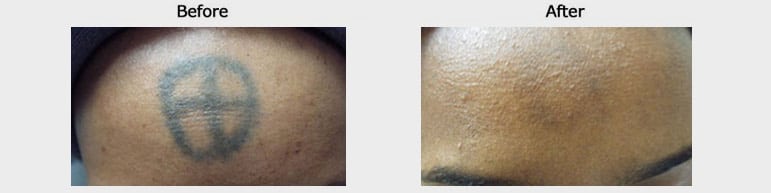
The Lumenis Q-Switched Nd:YAG is very effective for the removal of dark tattoos and the safest for skin of color. Using a top-hat beam profile ensures control of homogeneous energy delivery and maximum safety without hot-spots nor any risk of side effects or complication for the patient. The versatility of 5 spot sizes allows to use the ideal parameters for the clearance of dark tattoos.
The laser delivers high intensity light in pulses of a few billionths of a second into the treated area. The tattoo inks selectively absorb the light without damaging the normal surrounding skin tissue in the process. The tattoo ink is broken into smaller particles that are then harmlessly removed by the body in the weeks following treatment.
By Phagocytosis, by bodys lymphatics – particles broken to smaller sizes invisible to the eye.
Contraindications for laser:
- Skin darker than tattoo
- Severe tan
- History of Keloids
FAQs
Get In Touch
Schedule appointments anytime, anywhere! Pandit Clinic offers the convenience of online appointment booking just for you.